

Before booking, almost every firm asks the same thing: how much of the day is this going to eat up? Most of the answer comes down to law firm photography planning, since a well-organized schedule keeps attorneys in front of the camera and back to work with minimal disruption. It’s a fair question. Attorneys bill by the hour, calendars are tight, and nobody wants a photographer parked in the conference room while client work piles up.
The short version: a single attorney is usually in and out in 15 to 20 minutes. A full firm day runs longer, sometimes a few hours, depending on headcount and what you’re shooting. Below is what actually drives the timing, what happens once someone sits down, and how to keep the whole thing moving.
How long does a single attorney session take?
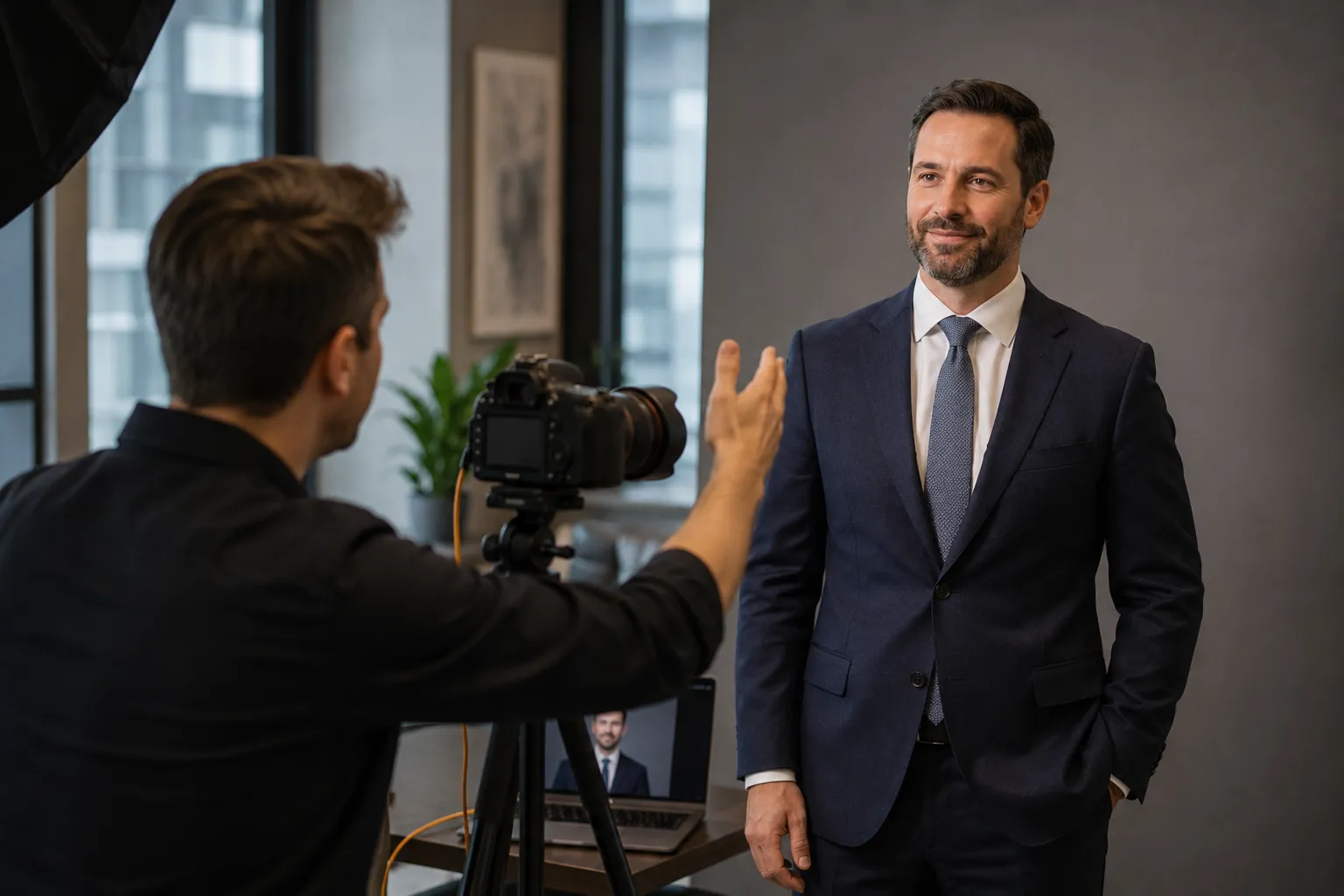
For most attorneys, the time in front of the camera runs 15 to 20 minutes.
That window covers a few poses, some expression adjustments, small lighting tweaks, and enough variety that you’re not stuck choosing between two nearly identical frames. A good photographer walks the attorney through it, which matters more than people expect — most attorneys would rather be doing almost anything else than this.
Someone comfortable on camera can wrap fast. Most lawyers (or anyone for that matter) are a little nervous at first. I am an expert at getting people comfortable quickly. I’ve photographed lawyers in as little as five minutes each if need be. Add a wardrobe change or a couple of branding shots and you’ll need a little more room. Rushing is the one thing worth avoiding. A headshot lives on a website and a half-dozen directory profiles for years, so the few extra minutes are worth it.
When several attorneys are booked on the same day, we stagger the slots. Keeps the room from getting crowded and keeps people from standing around waiting on each other.
What affects the length of a session?
Every firm is a little different, but the schedule usually comes down to three things.
How many attorneys you’re photographing
One attorney is a quick appointment. Ten is a production. The math is obvious, but the planning around it isn’t , a firm day needs a real timeline with named slots, or people drift and the schedule slips. We build that out ahead of time so attorneys can step out of their work, get photographed, and get back to it.
The type of images you need
A straight headshot is faster than a full branding session. If you’re deciding which style fits your firm’s goals, understanding the difference between attorney headshots and portrait photography can help you choose the right approach. A standard sitting usually covers:
- A few expression options, from approachable to serious
- A couple of background choices
- Basic posing variations
Once you add environmental portraits, office shots, or team images, the day stretches. Worth it if you’re refreshing the whole site, but plan for the extra time.
Wardrobe changes
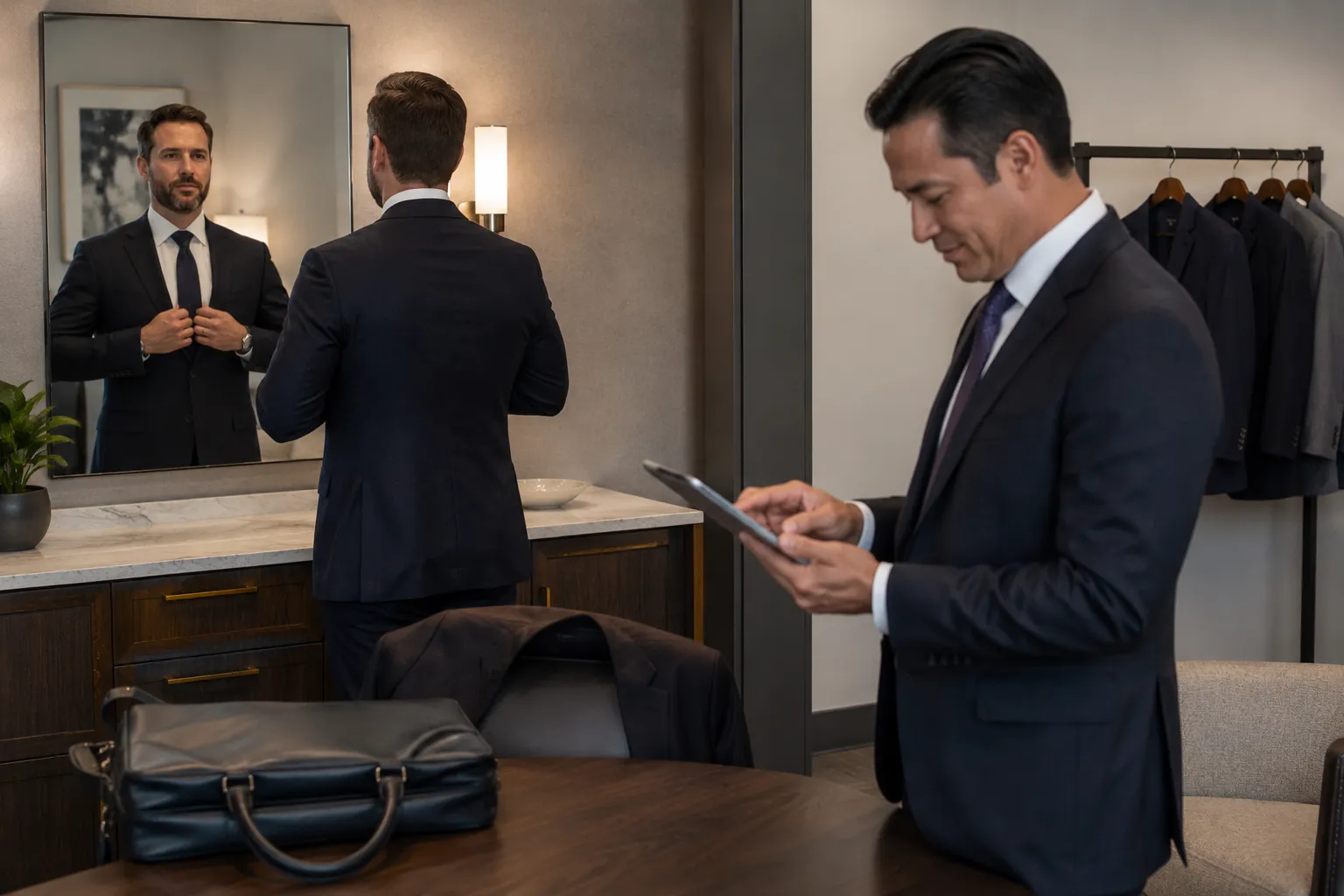
Swapping a jacket, tie, or blouse adds minutes, and it adds up across a team. Plenty of firms want two or three looks so they’ve got options for the website, LinkedIn, and the occasional speaking bio. Sorting out who’s changing into what before the shoot day keeps it from becoming a bottleneck. Sending everyone a guide on what lawyers should wear for headshots beforehand helps eliminate last-minute decisions.
What actually happens during the session
Knowing the flow ahead of time takes the edge off, especially for the attorneys who dread this part.
Most sittings follow the same shape. The photographer sets lighting and dials in the camera, then walks the attorney through poses and expressions. A typical session looks like:
- A quick conversation to settle nerves
- Lighting setup
- Guided posing
- Expression coaching
The direction is the part that makes or breaks it. Most attorneys don’t love being photographed, and without guidance you get stiff, arms-crossed results. The job is to get a real expression without it looking forced. I use many techniques to get a real expression … humor, humbleness and guidance. If you want the longer version of how we run a sitting, our attorney headshot sessions page walks through it.
Do group photos add time?
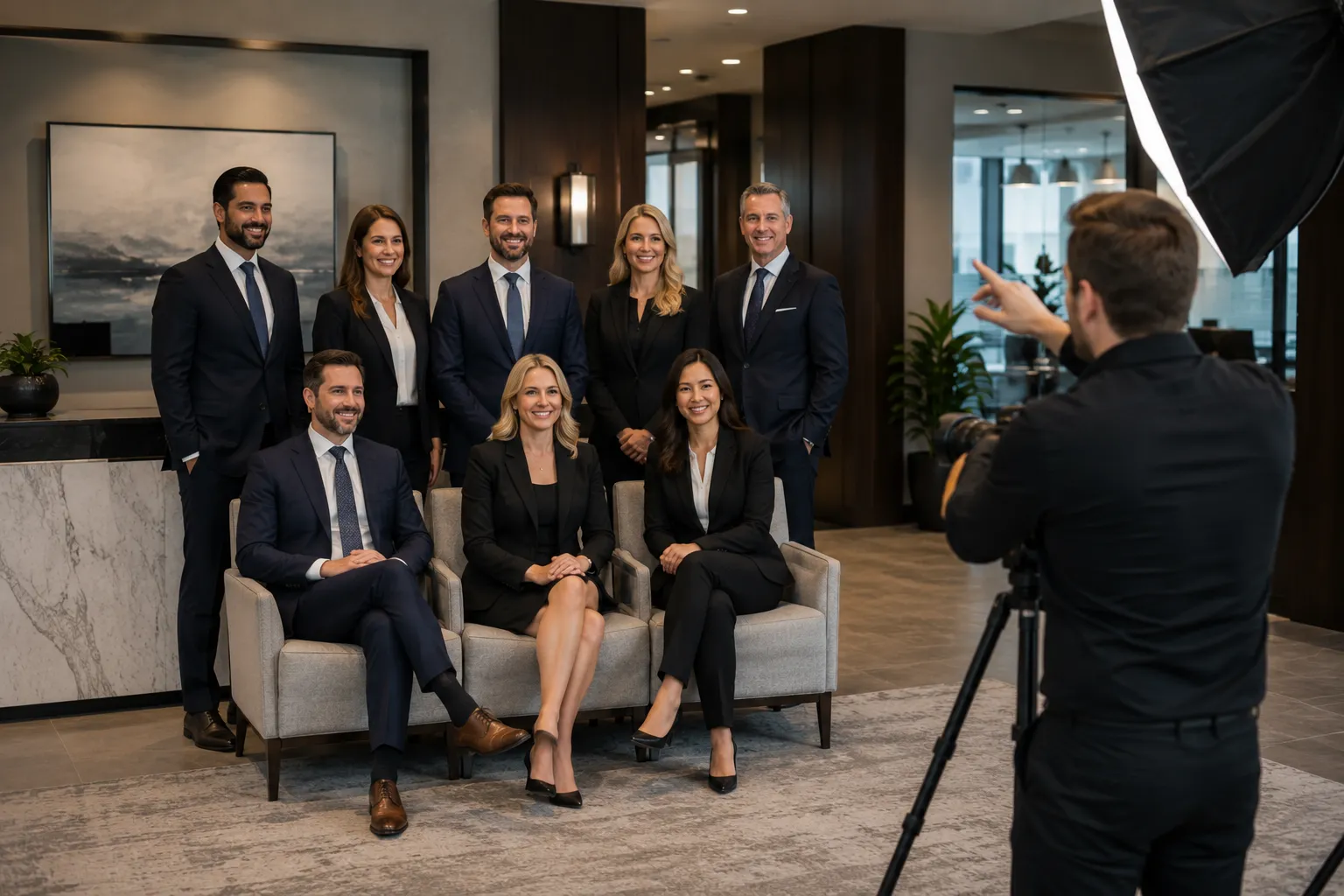
They do. Positioning several people, balancing the lighting across all of them, and making sure nobody’s blinking or half-hidden takes longer than a solo sitting. Every face has to read clearly and look professional, which is harder with eight people than with one.
A lot of firms also want executive shots, practice-group photos, or leadership portraits in the same visit. We’ll often fold individual headshots and team and group photography into one appointment so the look stays consistent across the whole site. Firms booking the entire team usually have a broader branding goal in mind, not just newer portraits.
Should you schedule during office hours?
Usually, yes. We work around meetings, court appearances, and client calls, so attorneys give up only a small slice of the day. Early-morning slots tend to look best — people are fresher before the day wears on them. Midday works when you need everyone in the building at once. It really depends on the firm’s calendar. We can even spread the shoot across multiple days if need be.
How to keep the session moving
A little prep does more for the schedule than anything else. When attorneys know what’s coming, the day runs tighter.
Lock the schedule early
Send a slot-by-slot timeline a couple of days out so nobody’s guessing when they’re up. I have a document you can use for signups. Makes it nice and simple.
Consider hair and makeup
On-site grooming cuts down on touch-ups and keeps things on pace, especially for larger teams.
Set a simple style guide
Preferred suit colors and a note on jewelry, sent in advance, prevents surprises.
Prep the room
Whatever space we’re shooting in should be clean, unlocked, and clear of clutter before we arrive.
None of this is complicated. It just removes the small delays that otherwise stack up across a full day.
Can it all be done in one day?
Almost always. Even bigger firms finish individual portraits and group shots in a single visit when the day is planned right: a shooting schedule, a staging area, and staggered arrival times. One well-run day usually produces enough images to carry a firm’s marketing for a year or more. I’ve photographed firms with teams of 50 people in one day. Anything is possible.
How long does editing take after the shoot?
Proofs
a secure online gallery of unedited frames, usually within two to three business days.
Selection
your team picks favorites plan on a few days, longer if several people need to weigh in.
Retouching
final editing runs about five to seven business days.
During retouching, we clean up temporary blemishes, soften harsh shadows, and balance color so the final files hold up everywhere they land — the website, print, and directory profiles included.
Why work with Law Firm Photos
We shoot law firms, and only law firms. The whole process is built around how attorneys actually work — the court calendars, the protected billable hours, the need for a consistent look across a website and a stack of directory listings.
Law Firm Photos bring the studio to you. Professional lighting and equipment set up on-site, so nobody loses an afternoon driving across town. Headshots, executive portraits, group shots, environmental work — it’s all covered under our law firm photography services. We work with firms across Los Angeles, Orange County, and San Diego.
The bottom line
Plan on 15 to 20 minutes per attorney. The full timeline shifts with firm size, the number of looks, wardrobe changes, and whether group shots are in the mix. Knowing that going in makes the day easy to schedule around attorneys get photographed efficiently, the images hold up, and the disruption stays minimal.
Ready to put a date on the calendar? Get in touch and we’ll plan an on-site session that fits your firm’s schedule.
Frequently Asked Questions
How many photos are taken during a headshot session?
Usually dozens per attorney, which gives you real options to choose from before retouching. The exact count depends on session length and how many looks you’re after.
What should attorneys wear?
Business attire in solid colors, well-fitted. Busy patterns tend to distract on camera, so they’re best avoided.
Should attorneys smile?
A natural smile reads approachable and confident. The right expression often tracks with practice area , a family attorney and a litigator don’t always want the same look.
How often should a firm update headshots?
Every two to three years is the common rhythm. A noticeable change in appearance or a rebrand is reason to do it sooner.
Can headshots and team photos happen the same day?
Yes, and it’s the efficient way to do it: one appointment, consistent lighting, a cohesive look across the whole team.