

Most law firms approach marketing the same way. They invest in SEO, run some ads, maybe refresh their website copy — and then wonder why the phone isn’t ringing the way they expected.
The problem usually isn’t the strategy. It’s what potential clients see when they arrive.
People don’t contact a law firm the moment they find it. They look around, compare options, and make a quick judgment call based on what the site feels like. That feeling is shaped heavily by what they see — not just what they read.
This piece covers what actually moves the needle in law firm marketing, with an honest look at where most firms are leaving trust (and clients) on the table.
Why Law Firm Marketing Has Gotten Harder

Referrals still matter. But clients now routinely do their own research before making contact — even when someone they trust recommended a firm. They’re checking websites, reading Google reviews, and forming opinions within seconds of landing on an attorney bio page.
Your online presence is doing a lot of work before you ever speak to anyone. And if it’s not doing that work well, you’re losing people you never knew were interested.
Marketing Channels That Actually Drive Results
There’s no single tactic that wins. The firms that grow consistently are the ones running multiple channels that support each other.
Search engine optimization
Search engine optimization connects you with people who are already looking for legal help. When someone searches "employment attorney in Los Angeles," they have intent. They're not browsing. They want to find someone. A strong SEO strategy puts you in front of those searches — and keeps you there over time.
Content marketing
Content marketing builds authority before a client ever picks up the phone. Well-written practice area pages, FAQ content, and articles that answer real questions help people understand their situation — and start to trust you before any conversation happens.
Paid advertising
Paid advertising delivers fast visibility, especially in competitive markets. But it has a ceiling. Ads bring people to your site. What happens after the click is a different problem.
Reputation management
Reputation management meaning your Google reviews, directory profiles, and peer recognition — rounds out the picture. Clients read reviews. A strong rating with specific, credible feedback can tip the decision.
These channels work well together. But they all point back to the same place: your website and your attorney profiles. If what’s there doesn’t hold up, the traffic doesn’t convert.
The Part Most Firms Overlook
Law firms spend real money driving traffic. They’re less careful about what that traffic finds when it arrives.
A visitor lands on your site and spends the first few seconds scanning — not reading. They look at how the site is organized, whether it feels current, and most immediately, they look at photos. Attorney headshots are often the first real impression of your people.
That impression happens fast. Faster than they read your bio, your credentials, or your practice areas.
A photo that looks outdated, poorly lit, or just casually snapped communicates something — even if you never intended it to. It creates a small hesitation. And in a competitive market, small hesitations are enough to send someone to the next result.
Why Professional Headshots Matter More Than Most Firms Think
This isn’t about vanity. It’s about the psychology of trust.
Clients hiring legal counsel are making a decision they care about deeply. They want to feel confident before they reach out. When an attorney’s photo looks sharp, professional, and consistent with the firm’s overall brand, it reinforces that confidence. When it doesn’t, it introduces doubt — quietly, without any one element being obviously wrong.
The headshots on your attorney profiles serve as a first handshake. They need to communicate confidence, professionalism, and approachability — ideally all at once.
A few things separate a strong headshot from a weak one:
- Lighting that's clean and flattering, not harsh or shadowy
- A background that's neutral and distraction-free
- Attire that reads as professionally appropriate for the legal field
- An expression and posture that feel natural rather than stiff
None of this happens by accident. And it definitely doesn’t happen with a phone camera propped against a window.
Why Consistency Matters in Marketing as Much as Quality?
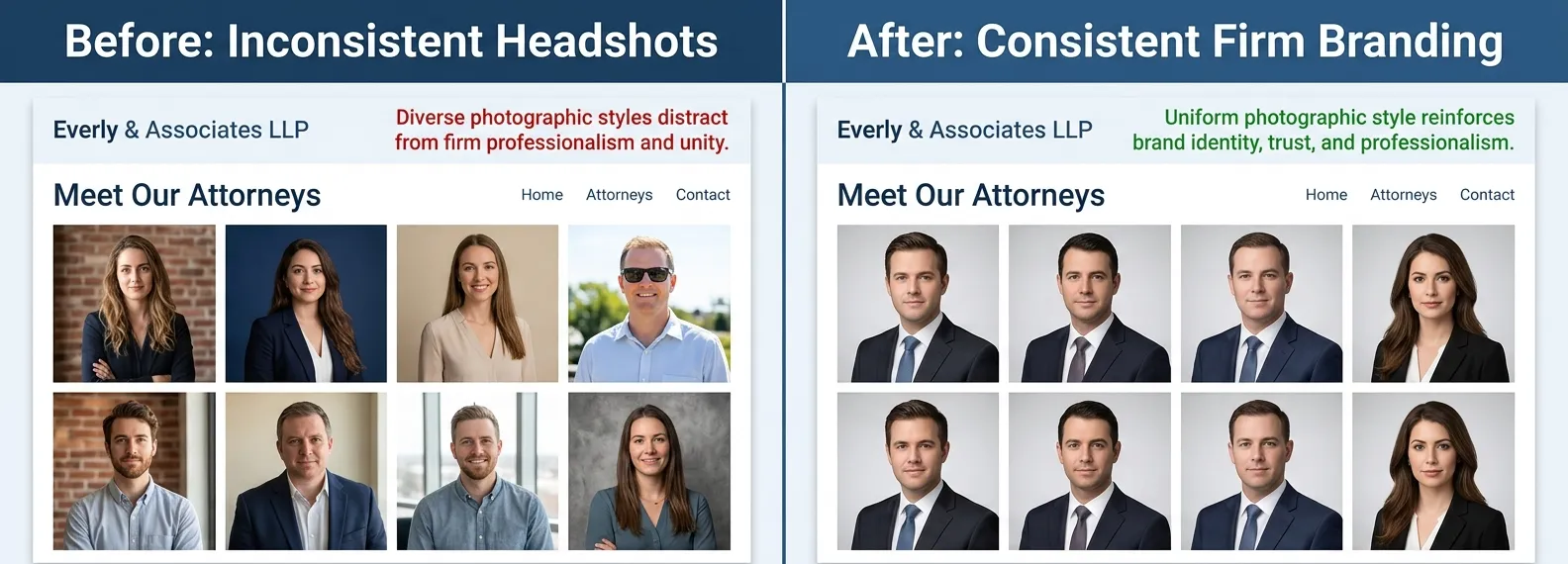
One strong headshot isn’t enough. I’ve seen hundreds of firm websites where half the attorneys have photos from ten years ago and the other half were shot on someone’s iPhone. You can tell immediately and it speaks volumes.
It doesn’t just look disorganized. It signals to clients that the firm doesn’t pay close attention to how it presents itself. That’s not the message you want attached to your brand.
When every attorney’s photo follows the same style — similar lighting, similar background, similar framing — the firm reads as put-together. It builds a sense of cohesion that carries through the rest of the client experience.
Our attorney headshot sessions are built around this consistency. Everyone on your team looks like they belong in the same firm, because they do. When I work with large firms, I have to match the lighting with every subject. When every attorney’s photo follows the same style – similar lighting, background and framing, the firm reads as put-together.
Where Headshots Actually Appear (It's More Than Just the Website)
Attorney photos don’t just live on your About page. They appear:
- On Google Business profiles
- On Avvo, Martindale, and other legal directories
- In LinkedIn profiles and company pages
- In email signatures
- In digital ads and remarketing campaigns
Every one of those placements is a potential first impression. The quality of the photo shapes how that moment goes.
Branding vs. Lead Generation: Which Comes First?
Firms often treat these as competing priorities. They’re not.
Lead generation — whether through ads, SEO, or referrals — brings people to your brand. Branding determines what they find when they get there. One without the other underperforms. Ads that drive traffic to a weak website produce expensive leads that don’t convert. A great-looking site with no traffic doesn’t grow.
The smarter sequence is to get your visual presentation right first, then amplify it. Once your website and profiles reflect the level of your firm — professionally and consistently — every marketing dollar you spend works harder.
Our law firm photography services are designed specifically for this: helping firms get their visual foundation right so everything else performs better.
What Makes a Strong Attorney Profile Page
The attorney bio page is often the most visited page on a law firm website, after the homepage. Clients go there before they decide whether to call.
A profile that works includes:
- A professional headshot that actually looks like the attorney (not a version from eight years ago)
- A bio that's direct and readable — not stuffed with credentials no client will evaluate
- Clear practice areas and relevant experience
- Contact information that's easy to find
The photo and the bio work together. A strong headshot makes someone want to read the bio. A compelling bio makes them want to call. When one element is off, the other doesn’t get the chance to do its job. A lot of clients won’t consciously say it, but they’ll scroll through profiles and skip right past the ones that don’t feel current.
Why Real Photos Outperform Stock Images Every Time
Stock images are a shortcut that costs you more than you save. Clients recognize them, often consciously. When someone sees a photo that clearly doesn’t represent the actual firm, it creates distance.
Real photos of real attorneys and real offices don’t just look more professional — they give clients something to connect with. They communicate that this is a real team, operating in a real space, with real people they might actually work with.
Authenticity shows. So does the absence of it.
How to Build Something That Lasts
The firms that hold strong market positions over time aren’t the ones running the most aggressive ad spend. They’re the ones that built consistent, credible brands — and maintained them.
That means keeping your website current, refreshing attorney photos when they’re clearly dated, maintaining consistent messaging across every platform, and thinking about how your firm presents itself at every touchpoint.
Strong professional headshots for your team are a foundational part of that. Not a one-time project — an ongoing commitment to looking like the firm you actually are.
Ready to Update Your Firm's Photography?
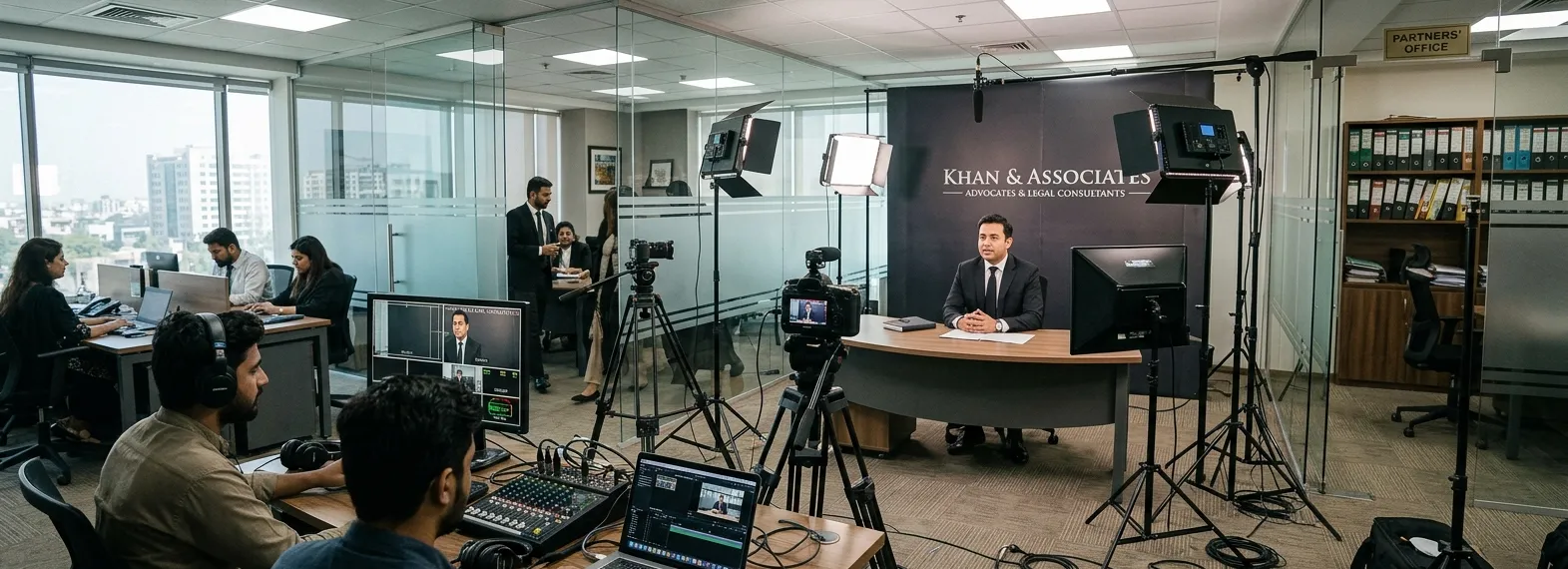
Law Firm Photos works exclusively with law firms across Los Angeles, Orange County, and San Diego. We bring a fully equipped mobile studio directly to your office, so there’s no need to coordinate off-site logistics or interrupt your team’s schedule any more than necessary.
If your current photos aren’t representing your firm the way they should, let’s talk about what a shoot would look like for your team.
What's the most effective marketing strategy for a law firm?
The most effective approach combines SEO, content marketing, and strong visual branding. Each channel supports the others — but all of them depend on clients finding a professional, credible presentation when they arrive on your website.
Do professional headshots really affect law firm marketing results?
Yes. Attorney photos are often the first thing a potential client looks at when visiting a law firm website. A professional, current headshot builds immediate trust — while an outdated or low-quality photo can create hesitation before a client reads a single word.
Why is visual consistency important for law firm branding?
When every attorney’s photo follows the same style, the firm reads as organized and professional. Inconsistent photography — different lighting, backgrounds, or quality levels — signals a lack of attention to detail, which is not the impression any law firm wants to leave.
Should law firms use stock images on their website?
No. Stock images are recognizable and feel generic. Real photos of your actual attorneys and offices create a stronger, more authentic connection with potential clients.