

Lawyer headshots do more work than most firms realize. Before a visitor reads a single word of an attorney bio, they have already formed an impression. It happens fast — within a second or two of landing on the page.
People searching for legal help are often under some kind of pressure. They want to know quickly whether the attorney they are looking at seems competent, trustworthy, and approachable. The photo next to the name is the first signal they get.
Law firm websites now function as the first meeting between an attorney and a prospective client. Bio pages, LinkedIn profiles, and legal directories all play a role in that introduction. The photo is where that introduction starts.
This post covers how lawyer headshots shape first impressions, where potential clients encounter them, and why they directly influence whether someone fills out a contact form or moves on.
Do Lawyer Headshots Actually Affect Whether Clients Reach Out?
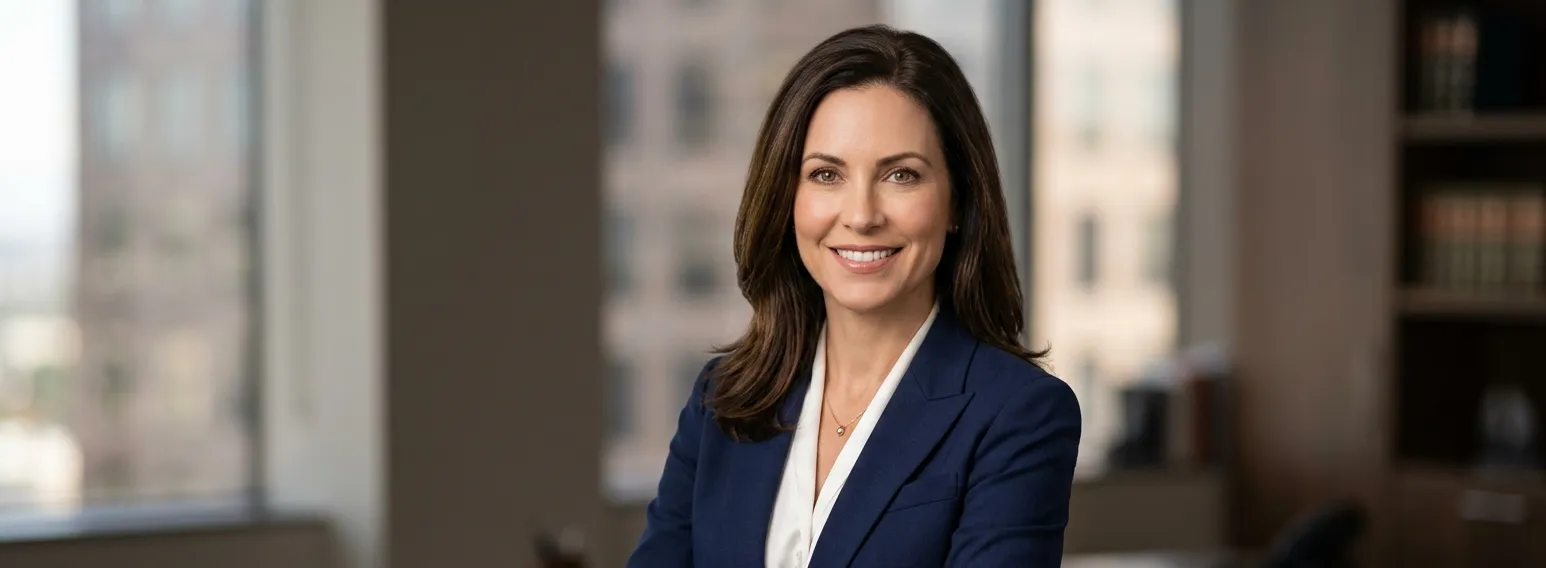
Yes — and the effect is more direct than most firms expect. People evaluate trustworthiness almost immediately when they see a face. That judgment influences everything that follows.
Visitors exploring a law firm website typically move through several pages before deciding whether to contact anyone. They may start with practice areas, then read bios. By that point, the photo beside the attorney’s name becomes part of the decision—and even awareness of professional headshots cost can shape expectations about quality and professionalism.
A strong image communicates credibility without requiring any text. It tells the visitor they are looking at someone who takes their work seriously.
Several visual signals feed into that judgment:
- Professional posture and a natural, confident expression
- Sharp image quality with clean, consistent lighting
- Visual alignment with the firm’s overall brand
- Consistency across all bio pages on the site
These elements work together. When they are in sync, visitors feel comfortable enough to take the next step — completing a contact form, calling the intake line, or scheduling a consultation.
Why Professional Attorney Photos Build Trust So Quickly
The brain processes faces before it processes words. This is not a theory — it is a well-documented aspect of how people evaluate situations. When someone sees a polished, natural portrait, the visual impression is formed before they read about the attorney’s credentials or case history.
Clients seeking legal representation often face real stakes: litigation, business disputes, family matters. They want reassurance. A photograph that reads as calm, capable, and approachable provides exactly that — even before the conversation begins.
Professional photography communicates several things at once:
- Attention to detail
- A sense of professional authority
- Approachability that makes the attorney feel accessible
That combination matters because trust starts before the first phone call. The right photo can make a potential client feel comfortable enough to keep reading — and eventually, to reach out.
How Attorney Headshots Influence Website Conversions
Lawyer headshots improve website conversions by helping visitors connect a real person to the services on offer. When a photo communicates professionalism and approachability, visitors feel more confident submitting a consultation form or making a call.
When potential clients browse a law firm’s website, they want to understand who they would actually be working with. A clear photo next to a biography turns a block of text into a recognizable person.
Visitors generally follow a predictable path:
- Search for legal services
- Land on a firm’s website
- Browse practice areas and attorney bios
- Decide whether to contact the firm
The attorney’s photo plays a direct role in that final step. If the image communicates professionalism and approachability, the visitor feels more confident about reaching out. If it does not, they move on.
This is also where visual consistency becomes important. Mismatched headshots across the site — different backgrounds, inconsistent lighting, a mix of formal and casual styles — create friction. Consistent attorney headshots reinforce credibility and strengthen the firm’s overall brand.
Where Potential Clients See Attorney Headshots First
Most prospective clients encounter an attorney’s photo before they ever visit the firm’s website. First impressions happen across several external platforms.
The most common touchpoints include:
- LinkedIn profiles
- Legal directories such as Avvo, Martindale-Hubbell, and FindLaw
- Google Business Profiles and search results
- Conference and speaking engagement pages
- News articles and media coverage
LinkedIn in particular has become a primary research tool. Prospective clients frequently review an attorney’s profile before scheduling a consultation — sometimes well before visiting the firm’s website at all.
When the same photo appears consistently across platforms, it builds recognition. A visitor who sees the same image on LinkedIn and then on the firm’s bio page picks up on that consistency. It signals organization and attention to detail. A visitor who sees three different photos — taken in three different decades, it seems — gets a different message.
What Makes a Lawyer Headshot Feel Both Authoritative and Approachable
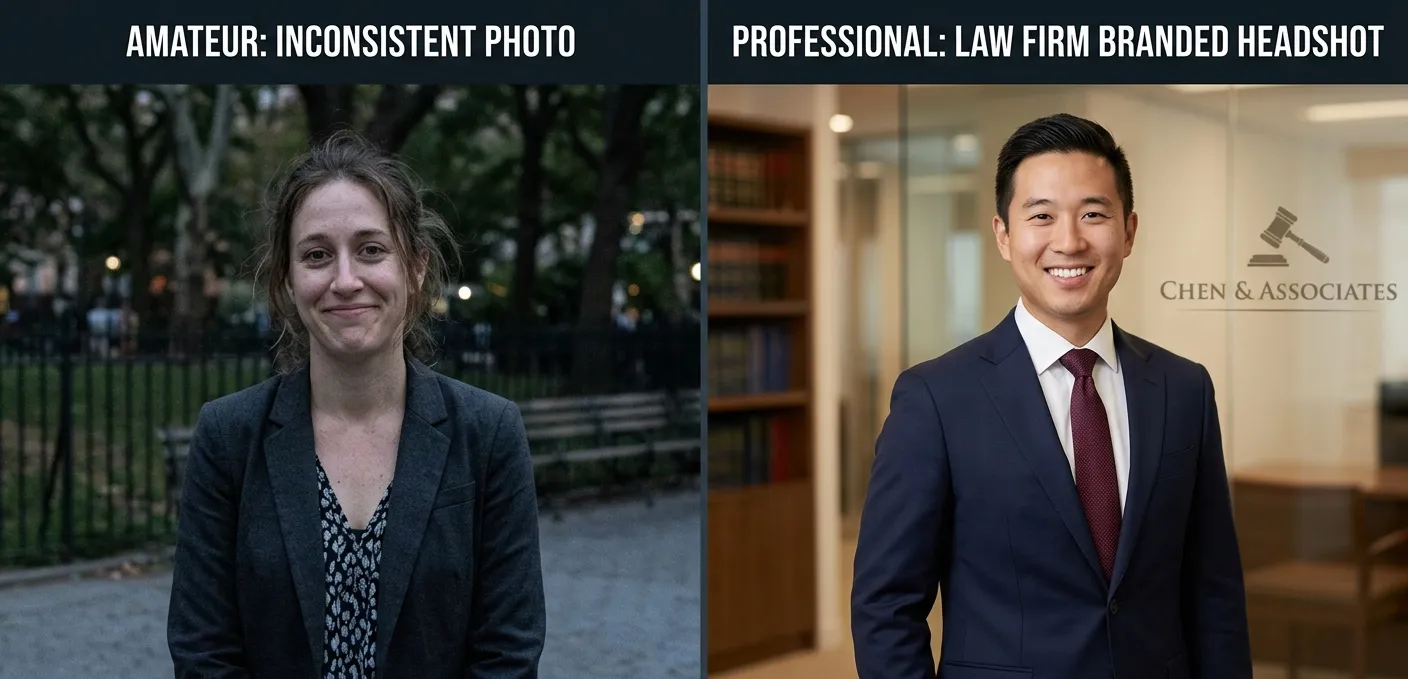
The best attorney headshots sit between two failure points: the overly stiff corporate portrait that feels cold and inaccessible, and the casual snapshot that undermines credibility. Neither works well in legal marketing.
Effective portraits usually share a few consistent qualities:
- Natural expression rather than a forced or posed smile
- Confident posture with relaxed body language
- Neutral background that keeps attention on the attorney
- Consistent lighting and framing across the entire team
Lawyers are people too. My approach is pretty simple: a little humor to break the tension, a deep breath, and a deliberate shift of pressure from them to me. We talk about whatever — the case they just finished, weekend plans, the parking situation downstairs. Nobody is thinking about the camera. That’s the point. The best headshots look candid because they feel candid. That’s what I’m trying to create.
Attire matters too. Professional clothing should reflect the culture of the firm and the expectations of the practice area. A litigation partner at a large downtown firm and an estate planning attorney at a boutique practice may project authority differently — and the photography should reflect that.
When these elements are working together, the image communicates both competence and accessibility. That is a harder balance to strike than it looks, which is one reason casual photography sessions rarely produce usable results.
Why Consistent Headshots Matter Across the Entire Firm
Visual consistency signals organizational discipline. When every attorney’s photo follows the same style, the firm looks cohesive. Visitors feel they are dealing with a unified team, not a collection of individuals who happened to share office space.
Inconsistent photos create a different impression. Different backgrounds, varying lighting quality, and mismatched image styles make a website look patched together over time. (Firms are often surprised to realize how many partners are still using photos from their previous firm.)
Many firms address this as part of a broader law firm photography refresh — combining individual attorney headshots with office photography, group portraits, and environmental images that reflect how the firm actually works. The result is a visual identity that holds together across the website, directories, and marketing materials.
Why Law Firm Photography Requires a Specialized Approach
Law firm photography is different from general corporate photography. The logistics are more complicated, the stakes are higher, and the environment demands discretion.
Law offices are active workplaces. Partners have depositions. Associates have hearings. Scheduling a team of 20 attorneys for photos on the same day requires working around court calendars, client meetings, and travel schedules — not just sending out a calendar invite and hoping for the best.
At Law Firm Photos, we bring a fully equipped mobile studio directly into the office. Individual sessions run efficiently, typically 10 to 15 minutes per attorney, so billable time is protected. Every portrait is photographed with the same lighting setup, which means the images are consistent across the entire team whether we photograph five attorneys or 100.
I recently photographed the team at California Attorney Group, and the lead attorney was tied up on an important call when we arrived. We pivoted immediately — shifted to team photos first and circled back to his headshot once he was free. No disruption, no delay, no billable time lost.
We work with firms across Los Angeles, Orange County, and San Diego, and we travel for firms with multiple offices or distributed teams. The goal is always the same: professional photography that reflects the quality of work the firm actually does.
Why On-Site Sessions Work Better for Law Firms
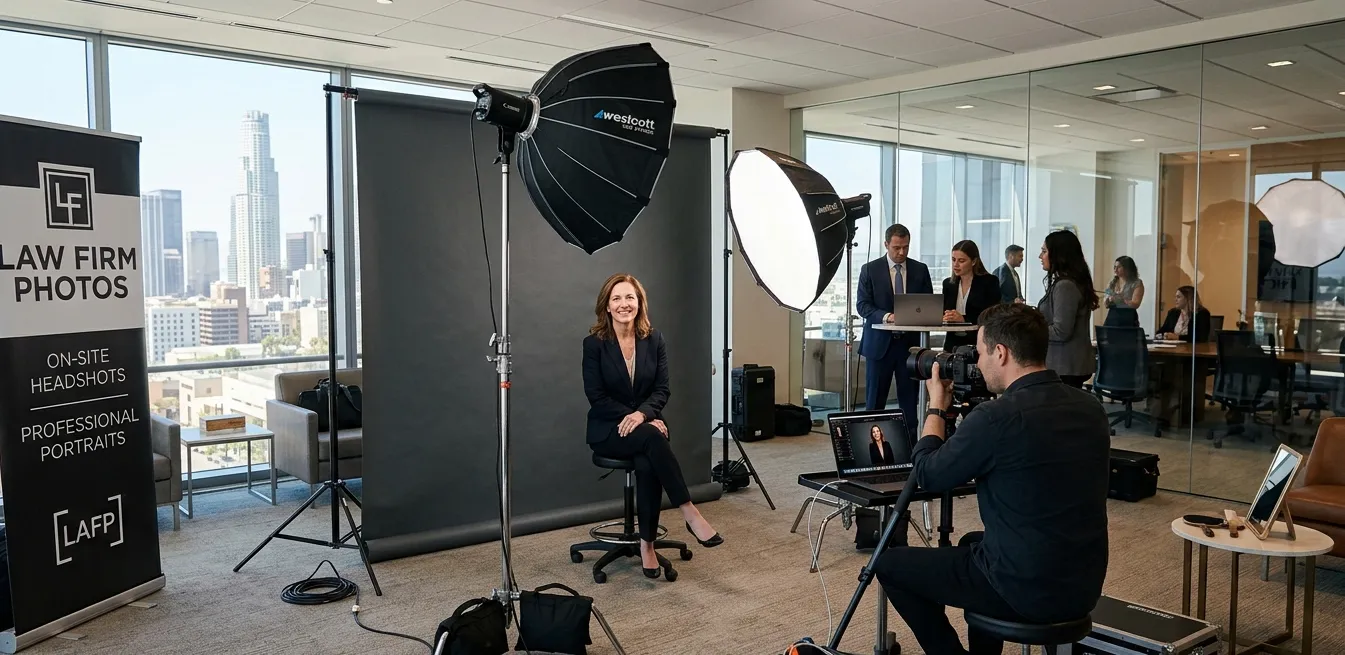
Asking attorneys to travel to an outside studio adds friction to an already difficult scheduling problem. For partners and senior associates, that friction usually means the session gets postponed indefinitely.
On-site photography keeps the process practical. Attorneys step away from their desk for a short session and return to work. There is no commute, no parking situation, and no half-day blocked off on the calendar.
The consistency benefit is equally important. When the entire team is photographed in the same environment on the same day with the same setup, the firm gets a unified set of images it can use across the website, LinkedIn, legal directories, and marketing materials without worrying about how they will look side by side.
The Bottom Line
First impressions in legal marketing happen online, often long before a prospective client considers picking up the phone. Attorney bio pages, LinkedIn profiles, and legal directory listings are where those impressions form.
Lawyer headshots are not a peripheral concern. They are the first thing many visitors see, and they play a direct role in whether someone feels confident enough to reach out.
Professional photography helps a firm look like what it actually is — organized, capable, and worth trusting. When done correctly, it supports conversions and reinforces the firm’s brand across every platform where it appears.
If your firm is overdue for updated attorney headshots, we can help. Law Firm Photos handles the full process, on-site, with minimal disruption to your team.
Schedule a consultation at lawfirmphotos.com to discuss your firm’s photography needs.
Do professional lawyer photos really influence whether someone contacts a firm?
Yes. Visitors form judgments based on visual cues within seconds of landing on a page. A professional attorney headshot establishes credibility immediately, which makes potential clients more comfortable taking the next step toward a consultation.
Should attorney headshots match across LinkedIn profiles and the firm’s website?
Yes. Consistent images across LinkedIn and bio pages strengthen recognition and reinforce the firm’s professional identity. When the same photo appears on multiple platforms, it signals consistency — which is a form of credibility.
How often should law firms update their attorney headshots?
Most firms benefit from updated headshots every two to three years, or whenever significant branding changes occur. If an attorney’s appearance has changed noticeably, or if the firm has recently rebranded, sooner is better.
Do lawyer headshots affect consultation form submissions?
Yes. Visual trust-building signals — including professional headshots — lower the hesitation a visitor feels before submitting a form. When potential clients feel confident about who they are reaching out to, conversion rates improve.
Can environmental office photography work for attorney portraits?
Yes. Environmental portraits taken inside the office can look polished and authentic when executed with professional lighting and composition. They work particularly well for firms that want a warmer, less formal aesthetic while still maintaining a professional standard.