
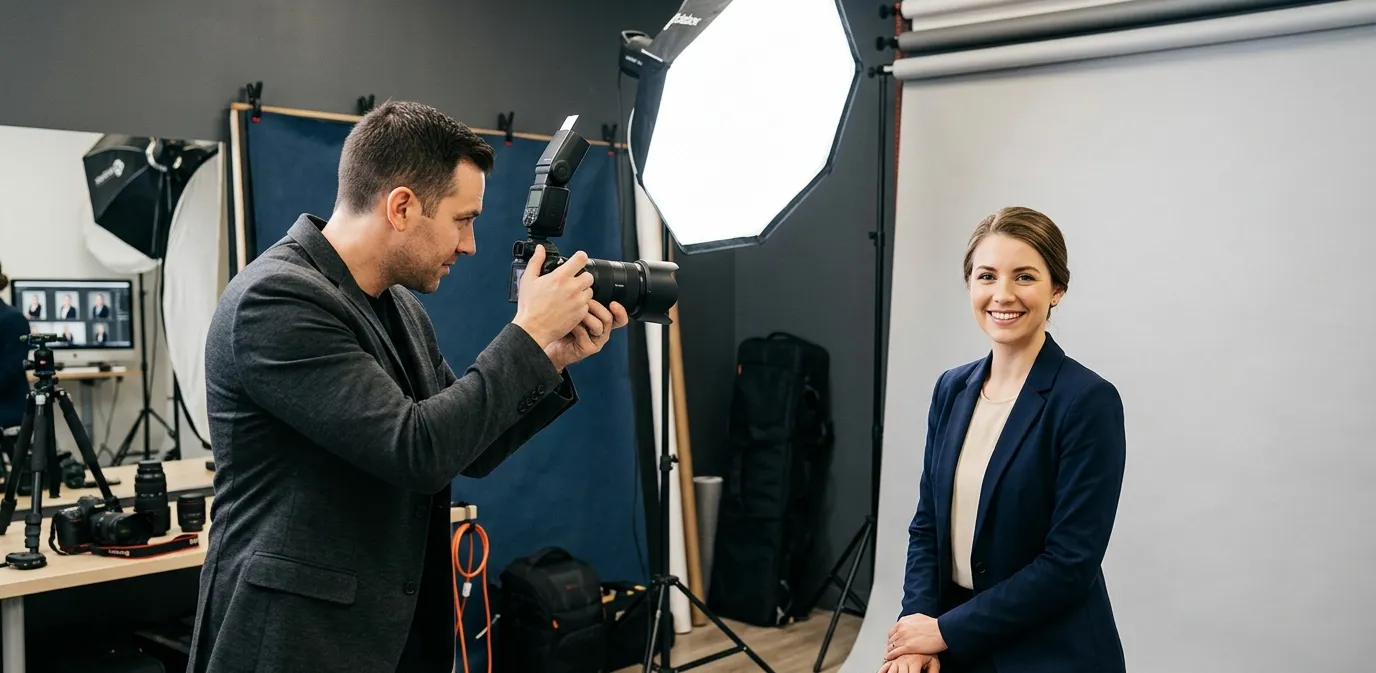
Professional headshot photography is about presenting the best version of yourself in a way that feels natural, clear, and aligned with your career. Every detail — from lighting to posture — works together to create that impression.
This guide breaks down exactly what goes into a great headshot, what to expect from a professional session, and how to get results that actually work for you.
What Is Professional Headshot Photography?
A professional headshot is a focused portrait that captures your face in a clean, polished, and approachable way. The framing is typically tight — head and shoulders — with controlled lighting and a simple background.
The goal is not just to document what you look like. It’s to communicate something about who you are professionally. A well-executed headshot removes distractions and lets your expression do the work.
Professional headshots are used across a range of platforms:
- LinkedIn profiles
- Law firm and company websites
- Speaker profiles and press kits
- Legal directories and bar association listings
Why Professional Headshots Matter
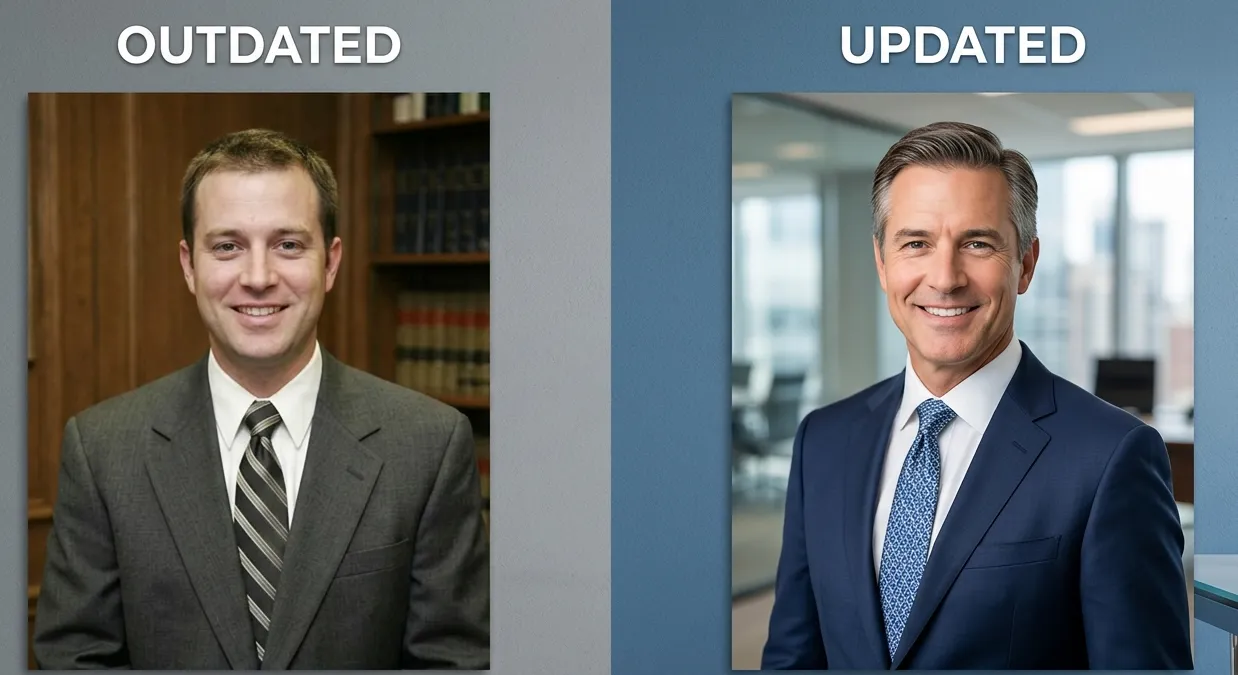
First impressions happen online now — often within a few seconds of someone landing on your profile or website. Your photo is usually the first thing they notice. A polished image signals trust and competence. A poor one signals the opposite.
For attorneys, this matters more than most people realize. Potential clients are making judgments about your credibility before they ever read a word of your bio. A blurry photo from five years ago isn’t just unflattering — it’s a quiet statement about how much you care about your professional image.
Headshots vs. Portrait Photography: What's the Difference?
Headshot photography is a close-up style focused on the face and shoulders. Portrait photography is broader — it allows for more creative framing, environmental elements, and expressive storytelling. This distinction is often discussed in depth when comparing Attorney Headshots vs Portrait Photography, especially in professional fields like law.
Headshots are clean and purpose-built for professional use. Portraits are better suited for editorial, personal branding campaigns, or creative projects.
For lawyers, the distinction matters when deciding what to use and where. A professional headshot belongs on your firm’s website, your LinkedIn profile, and legal directories. A more environmental portrait might work for a feature article or a speaking engagement bio — but it’s not a substitute for a proper headshot in those high-visibility spots.
How to Prepare for a Professional Headshot Session
A little preparation goes a long way. The attorneys who show up ready — groomed, dressed, and mentally relaxed — consistently get better results than those who treat it as a quick box to check.
Appearance and Grooming
- Groom neatly but naturally — avoid anything too styled or theatrical
- Keep hair in its normal state; dramatic changes right before a shoot rarely help
- Take care of your skin in the days leading up to the session
- Avoid heavy makeup — it can read differently on camera than in person
Mindset
Confidence shows. If you’re stiff or self-conscious in front of the camera, that shows too. A good photographer will help you relax, but arriving in the right headspace makes a real difference.
What to Wear for a Professional Headshot
Wear something clean, well-fitted, and appropriate for your professional context. The goal is to look like yourself on a good day — not like you borrowed someone else’s wardrobe.
- Professional clothing that fits properly (not too tight, not too baggy)
- Solid colors perform better than busy patterns
- Navy, charcoal, and gray are reliable choices — they photograph well without competing with your face
- Match your attire to the tone of your firm and practice area
- Keep accessories minimal and avoid anything that catches the eye for the wrong reasons
For attorneys specifically, this is not the moment for creative experimentation. Dress the way you would for an important client meeting.
Poses That Work for Professional Headshots
Good posing isn’t about being dramatic. It’s about looking relaxed, confident, and natural. Small adjustments — a slight shoulder angle, proper chin position, relaxed jaw — make a bigger difference than most people expect.
For Men
A slight body angle works better than facing the camera straight on. It adds depth and avoids a flat, passport-photo look. Keep shoulders relaxed but upright. A neutral expression or a slight smile reads well in most professional contexts.
For Women
Subtle head tilts and relaxed shoulder angles create a more dynamic and flattering image. Avoid over-posing — natural expressions photograph better than forced ones. Eye contact should feel confident without being intense.
Common Posing Mistakes
Most posing mistakes come from tension, not lack of skill. Watch out for:
- Stiff posture caused by trying too hard
- Forced smiles that don't match the eyes
- Poor chin positioning — slightly forward and down is usually right
- Looking slightly away from the camera without intention
The fix is simple: stay relaxed and let the photographer guide you through small adjustments.
How We Handle Posing on Every Shoot
Most people walk into a headshot session convinced they’re bad at this. They’re not — they’re just tense, and tension is what makes photos look stiff.
A big part of what I do on every shoot is help people forget they’re being photographed. That sounds simple, but it takes some work. I guide posture and positioning so you’re not thinking about it, which frees you up to just be present. When that happens, the expression takes care of itself — relaxed, natural, warm. Not the frozen smile you hold while someone counts to three.
No coaching required on your end. Show up, and I’ll handle the rest.
Equipment Used in Professional Headshot Photography

Professional headshot photographers bring a specific set of tools designed to produce consistent, sharp, and well-lit results — regardless of the location.
- Portrait lenses, typically 85mm to 135mm, for flattering perspective and sharp detail
- Studio lighting equipment for controlled exposure
- Softboxes, reflectors, and diffusers to soften and shape light
- Stable shooting setups and tripods
- Professional editing software for post-production refinement
At Law Firm Photos, we bring all of this equipment directly to your office. There’s no need to travel to a studio — we set up inside your space and work around your schedule.
Backdrop Options for Professional Headshots
The background in a headshot should support the image, not compete with it. Simple, clean options work best.
- Studio backgrounds (white, gray, or black) — classic, timeless, works for virtually every professional context
- Environmental backgrounds (your office, a conference room) — adds context and can feel more personal
- Outdoor backdrops — can work well with controlled lighting, but require more planning
For law firm websites and legal directories, neutral studio backgrounds tend to photograph most consistently, especially when you’re photographing multiple attorneys who need to look cohesive together.
How Often Should You Update Your Professional Headshot?
You should update your professional headshot every 1 to 2 years, or sooner if your appearance or professional role has changed significantly. A promotion, a major change in appearance, or joining a new firm are all good reasons to refresh your photo—especially when you consider how lawyer headshots influence clients and their perception of credibility. An outdated headshot doesn’t just look dated — it creates a small disconnect between who you are now and how you’re presenting yourself online.
How Much Does Professional Headshot Photography Cost?
Professional headshot sessions cost typically ranges from $150 to $800 for standard work. Specialized or high-end sessions — particularly those serving the legal market — can exceed $1,000 depending on the scope and level of service.
Pricing varies because not all sessions are comparable. A basic setup with one edited image is a different product than a full session with multiple looks, professional retouching, and same-day delivery. For law firms coordinating photography across a team of attorneys, the logistics alone require a different level of planning and execution.
Factors that influence cost:
- Photographer's experience and specialization
- Location and whether the photographer travels on-site
- Number of edited final images
- Turnaround time
Can You Take a Professional Headshot at Home?
Technically, yes. In practice, the results depend heavily on your setup and how much effort you’re willing to put into it.
The basics for a decent at-home headshot:
- Use natural window light — face slightly toward the light source for soft, even exposure
- Keep the background simple and uncluttered
- Position the camera at eye level
- Use a tripod or stable surface for consistency
Common mistakes include poor lighting, distracting backgrounds, and incorrect camera angles. AI editing tools can clean up minor issues after the fact, but they can’t replace proper lighting, good positioning, and a relaxed, natural expression in the first place. AI also frequently changes facial features, so proceed with caution!
For individual professionals on a tight budget, a careful at-home setup can produce usable results. For attorneys on a firm’s website or legal directory, where consistency and credibility matter, a professional session is worth the investment.
Why Specialized Law Firm Photography Matters
Law firm photography is different from photographing executives in other industries. The legal environment carries its own professional standards, and clients arrive with specific expectations about what a credible law firm looks like.
A photographer who works exclusively with law firms understands things that generalists don’t — how to schedule around court calendars and depositions, how to photograph 20 attorneys in a day without disrupting billable work, and how to maintain visual consistency across a team where everyone needs to look like they belong in the same firm.
At Law Firm Photos, our entire focus is the legal market. We serve firms with our lawyer photography services in Los Angeles, lawyer photography services in Orange County, and San Diego, and we bring the studio to you. That means no renting external space, no pulling attorneys out of the office for half a day, and no guesswork about whether the final images will look right on your website and across your marketing materials.
Headshot Booths at Legal Conferences
A headshot booth is a different service entirely from a firm photography session — and it serves a different purpose.
Legal vendors exhibiting at conferences use photo booths as a way to draw traffic to their booth. Offering free headshots is a genuine value-add for attendees, most of whom are attorneys who could use an updated photo. It creates a natural conversation starter and gives vendors a reason to collect contact information from people who stop by.
Law Firm Photos provides on-site headshot booths for legal conferences and trade shows across Southern California. We bring professional lighting and equipment, keep the line moving efficiently, and deliver images that attendees are actually happy to use — which reflects well on the company sponsoring the booth.
It’s a practical way to stand out on a crowded convention floor. Attorneys remember who gave them a good headshot.
How to Choose the Right Professional Headshot Photographer
Review their portfolio before anything else. Look at whether their work fits the professional context you need — a photographer whose portfolio is full of creative portraits isn’t necessarily the right choice for law firm headshots.
Pay attention to lighting consistency, how natural the subjects look, and whether the images hold up across different people with different features. Then ask practical questions: Do they come to you or do you go to them? What does the retouching process look like? How are final files delivered?
A photographer who specializes in law firms will already know the answers to the logistical questions — scheduling around depositions, working quietly inside an active office, producing images that work across your website, LinkedIn, and legal directory profiles.
Quick Reference: Headshot Do's and Don'ts
Do
- Maintain natural, relaxed expressions
- Keep the background simple and distraction-free
- Use flattering, controlled lighting
- Maintain confident eye contact with the camera
- Keep posture relaxed but upright
Don't
- Wear distracting or busy clothing patterns
- Over-edit images until they look artificial
- Use harsh or unflattering lighting
- Look away from the camera without clear intention
- Pose so stiffly that you look uncomfortable
Getting It Right
A professional headshot shapes how people perceive you before you’ve said a word. For attorneys, where trust and credibility are the foundation of every client relationship, a strong image isn’t a nicety — it’s part of the job.
The technical details matter: lighting, posture, background, lens choice. But the goal behind all of it is simple. You want to look like the version of yourself that walks into a room and commands respect.
If your current photos aren’t doing that, it’s worth fixing. At Law Firm Photos, we specialize in attorney headshots and law firm photography across Los Angeles, Orange County, and San Diego. We bring the studio to your office, work around your team’s schedule, and deliver results that hold up across your website, LinkedIn, and every directory listing where your name appears.
Ready to update your firm’s photography? Visit lawfirmphotos.com to learn more about our services or schedule a consultation.
FAQ
What is professional headshot photography?
Professional headshot photography is a focused type of portrait photography that captures a person’s face in a clean, polished, and approachable way — typically showing the head and shoulders with controlled lighting and a simple background. The primary purpose is professional branding.
How often should you update your professional headshot?
You should update your professional headshot every one to two years, or sooner if your appearance has changed significantly, you’ve received a promotion, or you’ve joined a new firm.
What is the difference between a headshot and a portrait?
A headshot is a tight, close-up image focused on the face and designed for professional use. A portrait is broader, more creative, and often used for editorial or personal branding purposes. Headshots are typically the right choice for law firm websites, LinkedIn profiles, and legal directories.
How much does professional headshot photography cost?
Professional headshot sessions typically range from $150 to $800. High-end or specialized sessions — including on-site law firm photography — can exceed $1,000 depending on scope, experience, and deliverables.
What should you wear for a professional headshot?
Wear clean, well-fitted professional clothing in solid, neutral colors. Navy, charcoal, and gray photograph well and avoid competing with your face. Keep accessories minimal and dress as you would for an important client meeting.
Can you take a professional headshot at home?
Yes, with good natural light, a clean background, and a camera at eye level, it’s possible to produce a usable headshot at home. For attorneys appearing on firm websites and legal directories, a professional photographer will produce more consistent, credible results.